From the first child tests
Sermorelin began as a drug for children who grew too slowly. Later tests measured growth hormone and IGF-1, a liver-made hormone, in older men.
You'll see which people joined, what the tests found, and what they cannot prove. Each fact leads to the paper that reported it.

What the makers wanted Sermorelin to do
Scientists made Sermorelin for short children with low growth-hormone output, hoping a copy of the brain's own order would help each child gain height faster during the first treatment test. The pituitary is a gland below the brain, about the size of a pea. Sermorelin copied the working front of that order. The copy had 29 amino acids, the small parts that form protein. That was enough to make the gland release growth hormone in brief bursts. The liver then made IGF-1, another hormone that helps guide growth. Doctors once prescribed Sermorelin to some short children. Researchers later tested it in older men. You'll find what changed in those tests and what did not. A higher blood result doesn't mean you'll feel younger or live longer.
What Sermorelin changed in children and older men
The first scientists copied 29 parts from a hormone order made in the brain. That short copy still reached the gland below the brain [13]. Sermorelin doesn't send ready-made growth hormone into the bloodstream. It asks the gland to send out a burst. The liver then makes IGF-1, a hormone that helps control growth [13].
The clearest result came from children with low growth-hormone output. Their yearly growth rose from about 4.1 centimeters to 7-8 centimeters, while IGF-1 did not climb too high [1]. The child growth research page names the children who joined and the checks doctors made. Sermorelin later won US approval for that child use. Another test gave healthy older men 0.5 milligrams or 1 milligram twice daily for 14 days. Growth hormone and IGF-1 rose as the amount increased. At the larger amount, blood results in the older men looked much like results in young men [2].
A small number after a fact points to the paper that reported it. The full paper list names the writers, journal, year, and link. The editors compared each claim with that paper. Reviews Sermorelin is not a clinic and cannot plan your care.
For the steps inside your body, read how Sermorelin reaches the gland. Adult findings and known harms are in the human research. The blood-clearance section explains why Sermorelin is gone from blood so quickly. The study amounts page tells what researchers used, never an amount for you. The plain answers page covers the questions people ask most.
What the Sermorelin peptide does
The Sermorelin peptide copies the working front of a hormone made in the brain [13]. Peptide means a few amino acids joined together, and amino acids are the parts that form proteins. Sermorelin uses 29 of those parts. That small chain can still give the gland the whole order [13].
This result let scientists make a much shorter drug. They didn't have to copy the full brain hormone. They kept only the part that worked. The shorter piece was simpler to make and study. At the gland, it acted much like the full hormone [13]. You do not need a chemical name to grasp the point. Sermorelin carries an order for growth hormone; it isn't growth hormone.
After a dose entered a vein, blood removed Sermorelin within minutes. Growth hormone remained raised for about three hours [3]. The drug's visit is brief, but the gland's answer lasts longer. IGF-1, another hormone made by the liver, may last longer still. Scientists later made drugs that remain longer in blood. The sermorelin vs ipamorelin page explains why that time gap matters when you compare them.
What Sermorelin acetate means on a label
Sermorelin acetate means Sermorelin joined to acetate, a salt that makes the drug easier to handle and store [13]. Acetate does not turn Sermorelin into a different medicine. The working part remains the same. You may see the short name in a paper and the longer name on a pharmacy label. Both point to the same active peptide. A peptide is a short row made from protein parts. The dry powder helps guard that row before anyone mixes it.
Sermorelin mechanism of action: how the pituitary answers
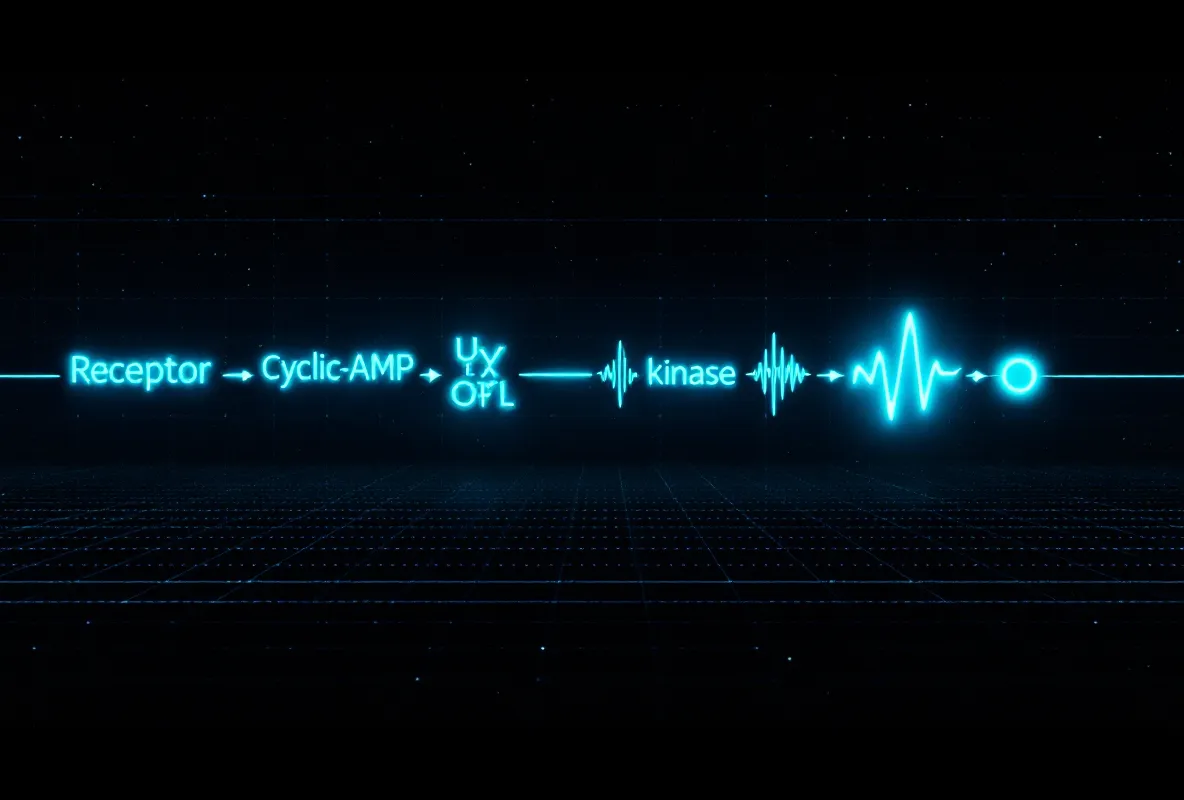
Sermorelin travels to the pituitary gland under your brain [13]. The drug attaches to hormone-making cells there [13]. Those cells then make and release more hormone. The hormone comes out in bursts, not in a steady stream. Growth hormone next tells the liver to make IGF-1, another hormone tied to growth [13]. Lab work suggests a call that lasts may also raise the number of hormone-making cells, but these papers do not show whether that happens in people or helps them [13].
Your body keeps its usual brakes. Sermorelin asks the gland to work; it does not add ready-made growth hormone to your blood. When IGF-1 rises, your body can hold back the next burst. A brain hormone can slow the gland too. One test found that growth hormone helps quiet the next response [11]. One review looked at all the ways the body can start or slow a growth-hormone burst [12]. That paper did not prove Sermorelin was safer or worked better.
Some doctors once favored this route because that brake stays in place. One medical writer said the IGF-1 brake made Sermorelin closer to the body's normal rhythm than direct growth-hormone shots [4]. That was the writer's view. It was not proof that adults felt better, stayed well, or lived longer.
Who took Sermorelin in the main human tests
Doctors first gave Sermorelin to very short children whose glands sent too little growth hormone. The US drug later left the market. Compounded Sermorelin now reaches patients only after a licensed clinician finds a prescription appropriate for that person. Researchers also tested healthy older men. Their growth hormone and IGF-1, the liver-made hormone tied to growth, both rose [2]. The children and older men are the main groups in these papers. Those findings do not prove that Sermorelin can slow aging for you.
What Sermorelin contains
Sermorelin is a peptide, which is a short chain made from protein parts. This drug copies the first 29 parts of the brain's order to the gland below it [13]. The shorter copy can still make that gland work. Sermorelin acetate includes a salt that helps with handling and storage. The drug contains no growth hormone. Your own gland does the work and sends the hormone into the blood.
What Sermorelin changed in the older-men test
Sermorelin gives the small gland at the brain's base a brief order. The gland answers with a burst of growth hormone [13]. The liver then makes IGF-1, a second hormone tied to growth [13]. Your body's brakes can slow the next burst. Growth hormone and IGF-1 rose in healthy older men during 14 days of testing [2]. Researchers measured blood, not daily life. The IGF-1 result did not prove that the men felt younger or lived longer.
What Sermorelin reviews say, and what tests can back
The Upsides & Downsides page begins with problems people linked to Sermorelin. It then compares the praise with human tests, so you can tell what has proof and what hasn't been tested.